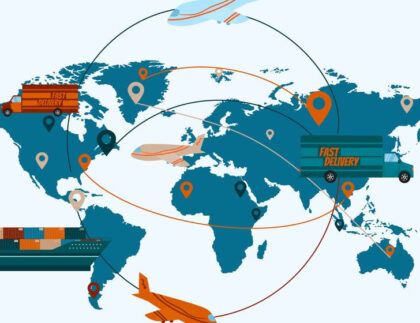
The logistics industry has long been dominated by established freight forwarding giants who manage the complex task of transporting goods across borders and cities. Yet, just as ride-sharing transformed urban mobility and home-sharing disrupted the hospitality industry, logistics is now facing its own wave of disruption. At the center of this shift is crowd-forwarding, a concept rooted in peer-to-peer logistics that leverages community-driven networks for moving goods more efficiently.
This emerging approach—sometimes referred to as crowdshipping or collaborative shipping—is increasingly being viewed as a serious alternative to traditional freight forwarding models. By harnessing underutilized capacity in vehicles and aligning it with real-time shipping needs, crowd-forwarding could pave the way for more shared freight services and agile supply chains.
Understanding Crowd-Forwarding
Crowd-forwarding builds on the principle that individuals and businesses often have unused transport capacity—whether it’s a delivery van making routine trips, a commuter car traveling between cities, or even space in personal luggage on international flights. By creating digital platforms that connect senders with these available carriers, companies can orchestrate on-demand cargo transport outside the conventional logistics channels.
Unlike traditional freight forwarding, which relies on centralized operations, warehouses, and rigid schedules, crowd-forwarding emphasizes flexibility, decentralization, and real-time coordination. It borrows heavily from the digital freight platforms movement, which already uses technology to match shippers with transport providers more seamlessly.
Why It Matters: The Promise of Peer-to-Peer Logistics
1. Last-Mile Delivery Innovation
The most expensive and challenging part of logistics is often the "last mile." By tapping into local networks of drivers, cyclists, or even pedestrians, crowd-forwarding can reduce costs and speed up deliveries. For e-commerce businesses competing in the age of same-day or next-day delivery, this agility is a game-changer.
2. Sustainability through Shared Freight Services
Traditional logistics often suffers from "empty miles"—trucks returning without cargo or vehicles underutilized on certain routes. Crowd-forwarding enables more efficient use of existing transport resources, reducing carbon emissions and aligning with sustainability goals.
3. Affordability and Accessibility
For small businesses or individuals who cannot access large-scale freight contracts, peer-to-peer logistics offers a cost-effective way to send goods. This democratization of logistics lowers barriers and empowers startups to operate globally with fewer constraints.
4. Resilience and Decentralization
During crises such as pandemics or supply chain disruptions, conventional logistics networks often experience bottlenecks. A decentralized, collaborative shipping model distributes the risk across thousands of participants, making it inherently more resilient.
How Crowd-Forwarding Could Disrupt Traditional Freight Models
The disruption lies not in replacing freight forwarding entirely but in redefining how freight services are consumed and delivered. Crowd-forwarding introduces several disruptive logistics models that challenge the established norms:
- From Centralized to Distributed: Traditional freight relies on fixed hubs and routes. Crowd-forwarding distributes this function across a wide network of everyday participants.
- From Contracts to On-Demand: Instead of negotiating complex contracts, businesses can book shipments instantly through digital apps, similar to ride-hailing services.
- From Standardized to Flexible: While traditional freight prioritizes large volumes and predictable flows, crowd-forwarding thrives on smaller, irregular shipments, making it ideal for SMEs and online retailers.
The parallels with Uber’s disruption of taxis or Airbnb’s challenge to hotels are clear. Just as those platforms redefined consumer expectations, alternative freight forwarding models could shift how businesses think about moving goods.
Challenges on the Road Ahead
Despite its potential, crowd-forwarding faces hurdles that must be addressed before it can scale into the mainstream:
- Regulatory Complexity: Freight forwarding is subject to strict customs and safety regulations. Ensuring compliance in a decentralized, peer-to-peer network is a major challenge.
- Trust and Security: Shippers need assurance that their goods will be delivered safely and on time. Platforms must invest heavily in reputation systems, tracking technologies, and insurance mechanisms.
- Scalability and Reliability: While crowd-forwarding works well for smaller or local shipments, handling large-scale international freight with consistency remains a significant test.
- Integration with Existing Systems: Many businesses still rely on established supply chain software and forwarders. Seamless integration with these systems is essential for adoption.
The Role of Digital Freight Platforms
Technology is the backbone of this shift. Emerging digital freight platforms are building trust by offering real-time tracking, transparent pricing, and secure payment systems. Some platforms even integrate blockchain to guarantee transaction integrity and automate contracts through smart agreements.
Artificial intelligence and predictive analytics are also enabling better route optimization and demand forecasting, ensuring that shipments align with available transport capacity. Over time, these platforms could evolve into ecosystems where traditional freight and crowd-forwarding co-exist, complementing each other.
What It Means for the Future of Logistics Startups
For startups, crowd-forwarding opens an entirely new frontier. By focusing on niche markets such as last-mile delivery in urban centers, cross-border shipping for SMEs, or eco-friendly collaborative networks, young companies can challenge the dominance of established logistics providers.
Moreover, as consumers demand faster, cheaper, and greener shipping options, the momentum behind disruptive logistics models is likely to accelerate. This gives startups an edge, as they are more agile and willing to experiment with models that traditional freight companies may view as too risky.
Conclusion
The rise of crowd-forwarding signals a shift in how we think about moving goods. Rooted in peer-to-peer logistics and powered by digital freight platforms, this model has the potential to create more efficient, sustainable, and inclusive supply chains. While challenges remain, especially in regulation and scalability, the opportunities for innovation are immense.
As with ride-sharing and home-sharing, the early adopters of collaborative shipping may redefine industry norms and expectations. For traditional freight forwarders, this is both a wake-up call and an invitation to evolve. For startups, it’s a rare chance to reshape the future of global trade.
In the coming years, alternative freight forwarding may no longer be an alternative at all—it could become the new standard for how goods move in a connected, on-demand world.