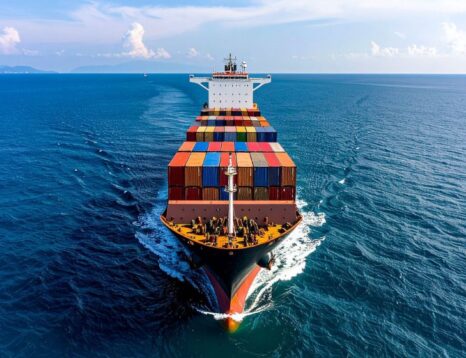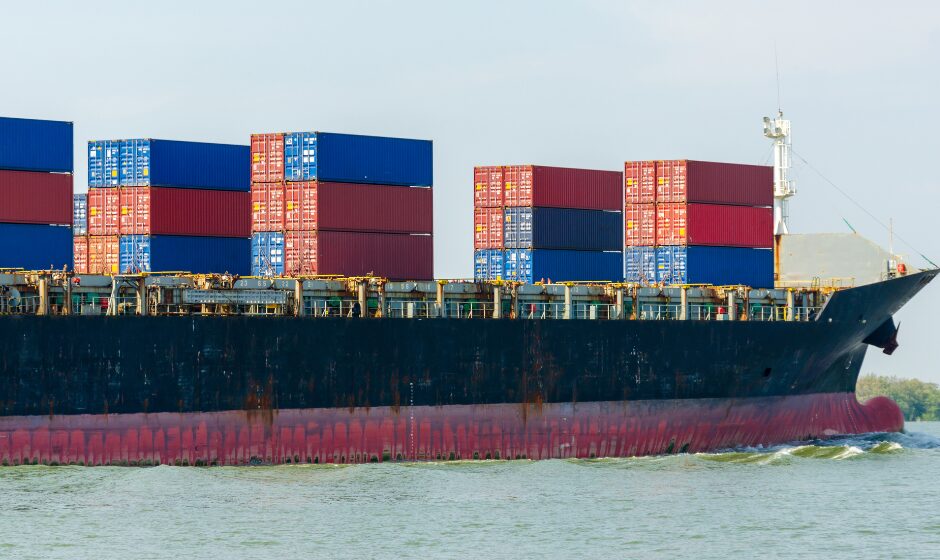
In recent years, the Panama Canal—a critical artery of global trade—has faced an unprecedented challenge: drought.
As water levels in the canal continue to drop due to persistent dry spells, the effects are rippling across global supply chains.
The Panama Canal drought has become more than just a regional concern; it is now a pressing global logistics issue, with ramifications for everything from container shipping to international freight rates.
The Role of the Panama Canal in Global Trade
Since its opening in 1914, the Panama Canal has revolutionized international maritime trade.
It allows ships to pass between the Atlantic and Pacific Oceans without the long and hazardous journey around the southern tip of South America.
Nearly 40% of U.S. container traffic and around 5% of global trade passes through the canal.
It’s a linchpin in the global supply chain, especially for cargoes traveling between Asia and the Americas.
However, the canal's ability to maintain this function depends heavily on one resource: water.
The Crisis Unfolds: Why Is the Canal Drying?
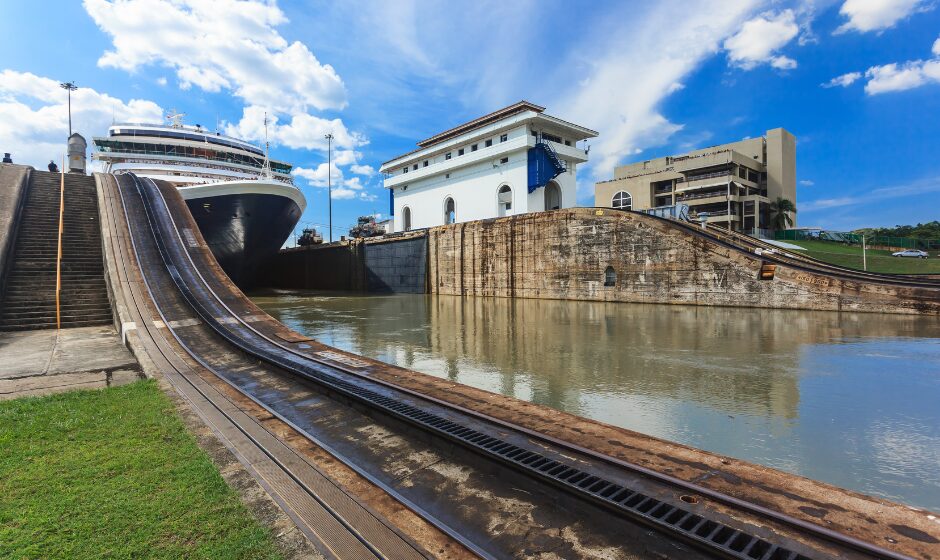
The Panama Canal relies on freshwater from nearby lakes, primarily Gatun Lake, to operate its lock system.
Each vessel passage requires millions of gallons of water to lift and lower ships through the locks. When rainfall is abundant, the system works well.
But in recent years, climate variability and El Niño conditions have led to prolonged droughts in the region, creating a canal water level crisis that threatens to undermine its efficiency.
In 2023 and into 2024, rainfall was more than 30% below average during the wet season.
This forced the Panama Canal Authority (ACP) to impose low-water shipping restrictions, including limitations on vessel weight and the number of daily transits.
Impact on Shipping: Delays and Restrictions
These restrictions have caused serious Panama Canal shipping delays.
The maximum allowable ship draft (the depth to which a ship is submerged) has been reduced multiple times.
Ships now have to carry less cargo to meet draft requirements, which not only reduces efficiency but also increases per-unit transport costs.
Furthermore, the ACP reduced the number of daily vessel transits from the usual 36 to as low as 24 per day.
This capacity limit led to long queues at both canal entrances, with some vessels waiting up to two weeks to transit.
These disruptions have contributed to widespread logistics delays through the Panama Canal, especially during peak shipping seasons.
Global Supply Chain Disruption
The knock-on effects of the Panama Canal drought are being felt globally.
Container shipping delays are causing scheduling headaches for freight forwarders and major retailers.
Time-sensitive cargo, including electronics, automotive parts, and perishables, is especially impacted.
Ports on both sides of the Americas are experiencing congestion, as shippers attempt to navigate around bottlenecks.
Companies that rely on just-in-time inventory systems are facing stockouts and rising costs, while shipping lines are being forced to reroute or reschedule voyages—often at significant financial cost.
In some cases, ocean carriers have begun freight rerouting alternatives such as sending vessels around the Cape of Good Hope or utilizing rail and truck intermodal solutions across North America.
These alternatives increase transit time and cost, but are sometimes the only viable options in the face of canal delays.
Maritime Climate Impact: A Growing Concern
This water crisis isn't an isolated event. It is part of a broader pattern of climate-related disruption to maritime infrastructure.
The maritime climate impact is becoming more visible, not only in Panama but in other regions facing similar drought-induced challenges.
The reliance on freshwater for the Panama Canal’s locks poses a fundamental vulnerability in a warming world.
Rising temperatures and unpredictable precipitation patterns mean that droughts could become more frequent and intense.
Without significant adaptation, the canal’s role in global trade could be compromised long-term.
What’s Being Done?
The Panama Canal Authority is not sitting idle. It has initiated several long-term strategies to address the crisis.
These include:
- Water-saving basins that reuse water between lockages.
- Investments in reservoir capacity to better capture and store rainfall.
- Studies into alternative water sources, including desalination and connecting new rivers.
However, these solutions take time and money. In the interim, the canal must operate under constrained conditions.
Industry leaders and government officials are pushing for greater climate resilience planning, not just in Panama but across global trade infrastructure.
The Search for Long-Term Solutions
Shipping companies, freight forwarders, and global logistics planners are beginning to treat the Panama Canal drought not as an exception, but as a potential norm.
This has led to the exploration of freight rerouting alternatives and broader diversification of supply chains.
For instance, the Arctic Northern Sea Route, long impractical due to ice, is now being reconsidered during summer months as ice melts from rising temperatures.
Other shippers are investing in regional manufacturing or nearshoring, reducing reliance on long, ocean-spanning routes.
In the Americas, land bridge options such as trucking and rail from Pacific ports in Mexico and the U.S. to Atlantic-facing cities are being tested as practical solutions when canal congestion peaks.
Business Responses and Adaptation
Companies that depend on predictable shipping timelines are adapting in various ways:
- Increasing inventory buffers to mitigate delays.
- Investing in supply chain visibility tools to track shipments in real time.
- Negotiating flexible contracts with shipping partners that allow rerouting or delays.
- Diversifying port options for both imports and exports.
These strategies are aimed at increasing resilience and ensuring that even in the face of Panama Canal capacity limits, operations can continue with minimal disruption.
The Outlook: A New Normal?
As climate change continues to exert pressure on global infrastructure, it’s increasingly likely that what’s happening in Panama today will become a blueprint for how the world must adapt.
Drought, heatwaves, and extreme weather will shape maritime routes and timelines for years to come.
The Panama Canal water crisis is a wake-up call—not just for shipping, but for the entire global economy.
It underscores the importance of sustainability in infrastructure design, proactive adaptation, and the need to future-proof vital global trade routes.
Conclusion
The drought afflicting the Panama Canal is more than a regional inconvenience; it’s a signal of larger shifts at play.
With Panama Canal shipping delays, container restrictions, and freight rerouting alternatives becoming the new reality, businesses must adjust or risk falling behind.
The global supply chain, already strained from previous disruptions, now faces a new challenge—one that demands innovation, flexibility, and long-term thinking to overcome.